Social computing has provided all types of individuals a way for them to reach out into the public, to learn and gain information, to communicate or simply “scroll around”. Are any of these actually beneficial for us? Technology, and therefor the way society communicates with each other too – thus the emergence of social computing.
The bigger and more integrated social computing is to our lives, the more it takes over our daily lives – how we think, feel or do things. Its functions that are highly beneficial for us are undoubtedly things that we should continue using, the ability to communicate with our family and friends from across the world is and always be a commodity we should not take for granted. Especially in today’s society where personal commitments limits our time for face-to-face communication even with those that are very close to us. On the flip side, social computing bears its consequences. The emergence and rise of anonymity in the internet promoted cyber bullying, online predation and various breach of privacy (Asia Society, 2010).
To help us make a decision on whether social computing is actually a beneficial aspect of our lives or simply a commodity as a result of technological and social advancement, we must talk about Maslow’s hierarchy of needs. Who is Maslow? Abraham Maslow was an American psychologist who is known for one of his theory which was the aforementioned 5 levels of human needs.
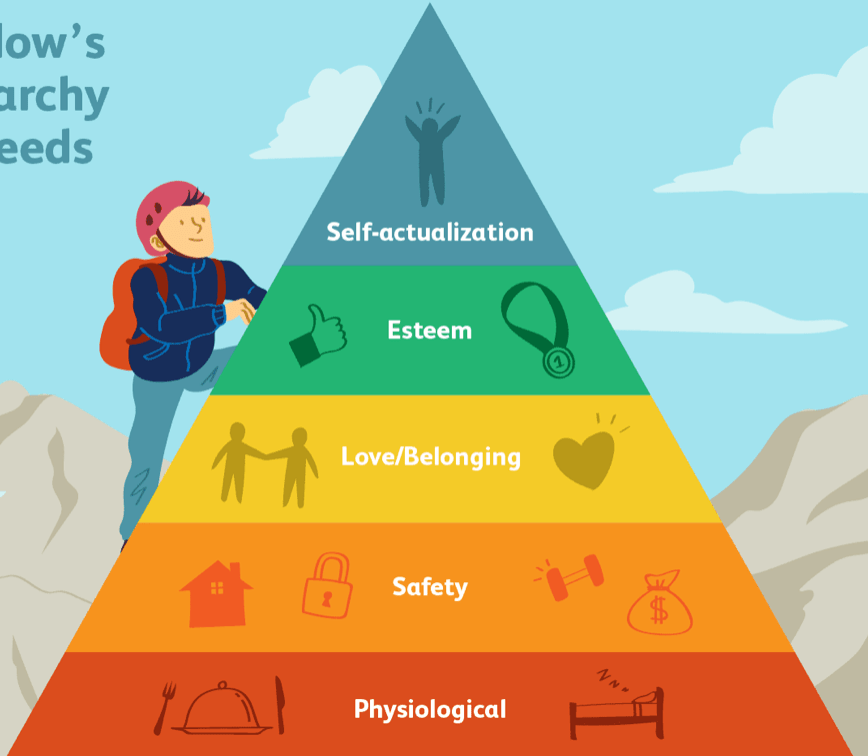
The image above shows the hierarchy of human needs, conceptualised by Maslow. He suggested that to reach a person’s greatest goal; the more basic needs have to be met first (Cherry, 2019). So what exactly does social computing have to do with this you might ask?
The by-products of using social computing apps or sites can be quantified and placed in each level of the hierarchy. Let us explore what this means step-by-step. Using social networking sites such as Facebook, Twitter, Instagram, Snapchat as context:
- Physiological needs – basic human (physical) needs for survival
- The need of actively doing something with an individual’s time
- Safety needs – another basic human need for survival although more complex in this context
- The need of online security and safety
- Need of Love and Belongingness – the need of feeling connected and a part of something
- Being a part of an online group, a society or a group chat where we can see that our presence matters
- Esteem needs – the appreciation of our contributions
- Praising of one’s work can boost an individual’s self esteem. Nowadays, people often take photos during a certain challenge they may be currently undertaking, praising them and their progress is an example of esteem needs.
- Self actualisation – the epitome of an individual’s goals
- In the context of social media, this could be the feeling of free-will in the internet. Being able to express your thoughts and feelings whilst your content carries a significant value to others
So what do you think? Do you think social computing fulfils an individual’s need also much that it can be said that it is truly beneficial for us and our day-to-day lives? Do the repercussions in expressing our thoughts and ideas (sometimes whole lives) in the internet – good enough reasons for us to stop and reflect upon the social conduct of today’s society.
References
- Cherry, K. (2019). The 5 Levels of Maslow’s Hierarchy of Needs. Retrieved from https://www.thoughtco.com/maslows-hierarchy-of-needs-4582571
- Hopper, E. (2019). Maslow’s Hierarchy of Needs Explained. Retrieved from https://www.thoughtco.com/maslows-hierarchy-of-needs-4582571
- Asia Society (2019). How Social Computing Impacts Society. Retrieved from https://asiasociety.org/hong-kong/events/how-social-computing-impacts-society
 Social Computing Blog